
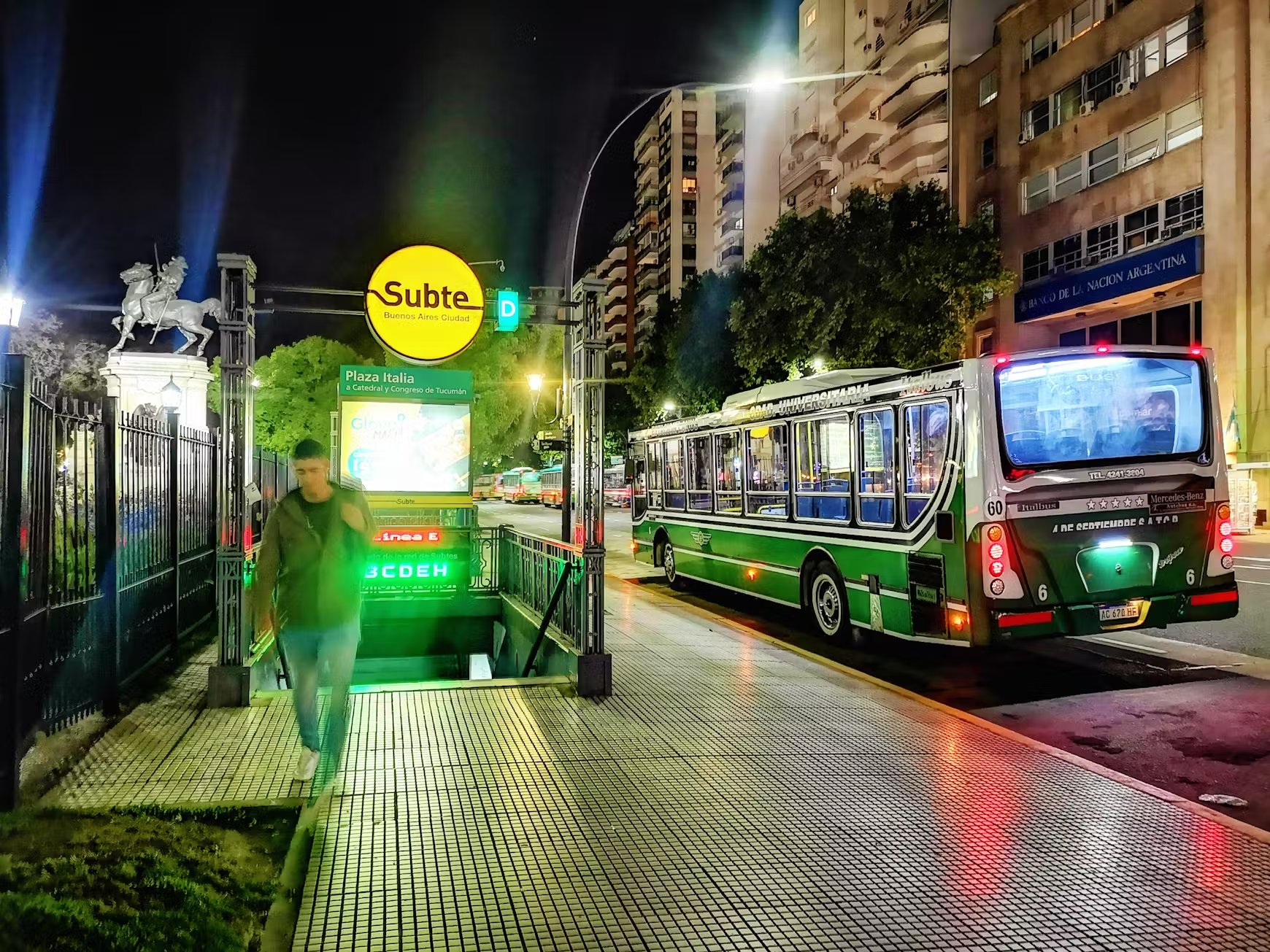
The first thing you’ll truly notice in Buenos Aires isn’t just the stunning architecture or the incredible steak, it’s the beautiful rhythm of the city, and that rhythm moves on wheels. The colectivo (city bus) hums down every avenue, and the Subte (subway) glides efficiently beneath your feet. For newcomers, this extensive system might initially seem overwhelming because it covers everything, but once you understand how it flows, it becomes second nature. In fact, most porteños (Buenos Aires residents) don’t own cars because they simply don’t need to, showcasing how easy it is to navigate this dynamic city without one.
Get Your SUBE Card First
To access Buenos Aires’s highly integrated public transport system, you’ll first need a SUBE card (Sistema Único de Boleto Electrónico). This essential, rechargeable card allows you to seamlessly pay for rides on buses, the Subte, and commuter trains with one simple tap, making daily commutes incredibly convenient (SUBE.gob.ar, 2025a).
You can easily purchase a SUBE card at Subte stations, numerous kioskos (convenience stores), or other authorized retail points throughout the city (Buenos Aires Ciudad, 2025).
Recharging your card is equally straightforward, done with cash at kiosks or via the Carga SUBE app, which links to Argentine bank accounts or prepaid apps (SUBE.gob.ar, 2025).
How to Ride the Colectivo (City Bus)
With over 150 lines, colectivos provide comprehensive coverage across nearly every corner of the city and operate 24/7, offering unparalleled accessibility (Mente Argentina, 2024).
To ride, simply signal the driver at the bus stop, state your destination (or the approximate fare zone if you know it), tap your SUBE card, and find a seat. Bus routes are clearly numbered, and many, like line 152 along Avenida del Libertador, offer scenic journeys (Buenos Aires Ciudad, 2025).
To plan your routes effectively and view real-time bus locations, indispensable apps like Google Maps and the official Cómo Llego app are highly recommended (Google Maps, 2025; Argentina.gob.ar, 2019).
Tip: Always extend your hand to signal the driver as the bus approaches your stop; otherwise, it might not stop. Also, remember to always enter the bus through the front door and exit through the back.
Navigating the Subte (Subway)
Buenos Aires’s subway system comprises 6 lines (A–H) that efficiently connect the city’s major neighborhoods, providing a fast and reliable mode of transport (Subte.com.ar, 2025).
Trains typically run from 5:30 a.m. to around 11:30 p.m. on weekdays, with frequencies ranging from every 3–8 minutes during peak hours (Study BA, 2025).
Subte rides are not only fast and reliable but also remarkably affordable, making them a cornerstone of daily life for porteños. Stations are clearly marked with a prominent blue “Subte” sign. Inside each train car, digital route maps illuminate your current location and upcoming stops, ensuring you know exactly where you are. While some signage now includes English translations, a basic understanding of Spanish route names will enhance your travel experience.
Must-Have Apps for Public Transport
To truly master Buenos Aires’s public transport, these apps are indispensable tools that simplify your commutes:
- Cómo Llego: The official app developed by the Buenos Aires government, essential for planning routes across all modes of transport and receiving real-time information (Argentina.gob.ar, 2019).
- BA Subte: Provides real-time subway status updates, alerts, and detailed maps of the Subte network (Google Play Store, 2025).
- Moovit: A globally recognized app that includes comprehensive data for Buenos Aires, offering real-time colectivo tracking, estimated arrival times, and multi-modal journey planning (Moovit, 2025).
Carga SUBE: The official app for recharging your SUBE card directly from your smartphone using linked Argentine bank accounts or prepaid apps, eliminating the need for physical top-up points (SUBE.gob.ar, 2025b).
Common Mistakes to Avoid
Avoiding these common pitfalls will ensure a smoother public transport experience:
- Not having credit on your SUBE: Buses do not accept cash payments (Sol Salutte, 2025). If your card runs out of balance, you won’t be able to ride. Always keep your SUBE card topped up.
- Boarding through the back door: Always enter buses at the front (where the driver is located) and exit at the back.
Assuming all English signs: While public transport signage has improved, Spanish remains dominant. Learning key Spanish phrases for directions and destinations will be immensely helpful.
This Is Your Key to the City
Getting around Buenos Aires by bus and Subte doesn’t just help you commute efficiently, it deeply connects you to the city’s pulse. The vibrant scenes, everyday conversations, and diverse landscapes glimpsed from a colectivo window or on a Subte platform tell you more about porteño life than any tourist guide. Once you master this system, you’ll realize how intimately connected and accessible the city truly is. Efficient, affordable, and designed for locals and newcomers alike. It’s your ultimate gateway to feeling truly at home in Buenos Aires.


