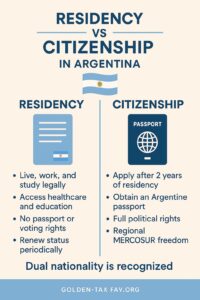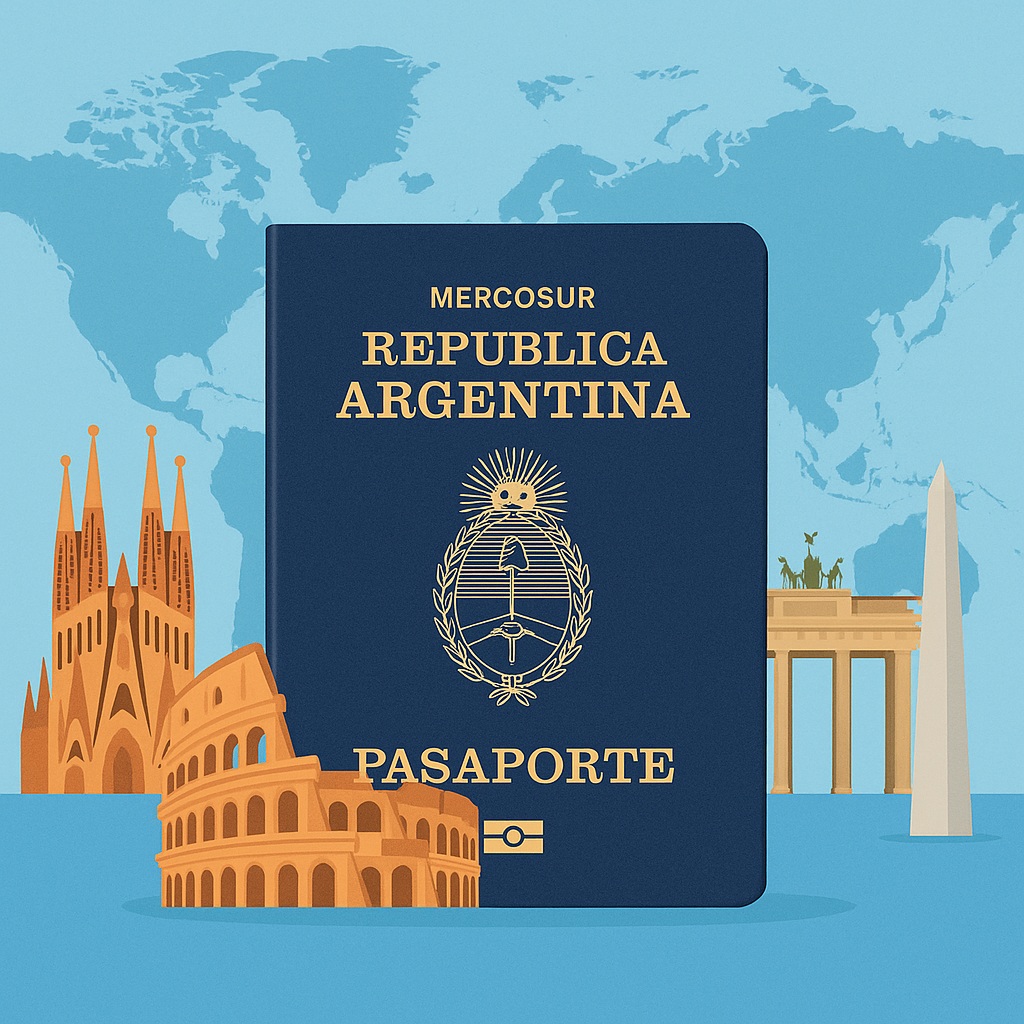
Argentina’s passport may not always grab international headlines, but for those fortunate enough to hold it, it quietly unlocks a world of unparalleled opportunity. With visa-free or visa-on-arrival access to over 170 countries and territories, it consistently ranks among the most powerful passports globally, often placing within the top 20 on reputable indices (Henley & Partners, 2025).
Beyond mere travel access, one of its most strategic benefits lies in the enhanced ability to live, work, and even settle permanently in dozens of countries, particularly across Europe and Latin America, with significantly less bureaucracy and often accelerated pathways.
This unique advantage is exceptionally valuable if you’re seeking international flexibility, whether driven by career aspirations, a desire for a different lifestyle, pursuit of world-class education, or planning for a comfortable retirement abroad.
Spain: Barcelona or Madrid
Spain remains arguably the most popular and accessible destination for Argentines seeking to live abroad. This strong appeal is rooted deeply in the shared history, language, and profound cultural ties between the two nations. For Argentine passport holders, these connections translate into tangible, expedited residency and naturalization pathways that are largely unavailable to other non-Ibero-American foreigners.
The most notable benefit is the fast-track to Spanish citizenship by residency. While the general rule for most foreigners requires ten years of legal, continuous residency in Spain to apply for naturalization, citizens of Ibero-American countries (including Argentina), Andorra, the Philippines, Equatorial Guinea, and Portugal are eligible to apply after just two years (Código Civil Español, Art. 22; Ministerio de Justicia de España). This significantly reduces the waiting period, making Spanish citizenship a realistic medium-term goal.
Beyond citizenship, Argentines can also benefit from specific residency options designed for those in irregular situations, such as the arraigo programs (Ministerio de Inclusión, Seguridad Social y Migraciones, 2024):
- Arraigo Social: For those who have lived in Spain for at least three years, demonstrating social integration and often requiring a job offer.
- Arraigo Laboral: For those who have worked legally for at least six months while in an irregular status.
- Arraigo para la Formación: A newer pathway for those who have been in Spain for two years irregularly, allowing them to gain residency while undertaking vocational training.
Living in dynamic cities like Madrid, Spain’s bustling capital, or the culturally rich coastal hub of Barcelona is made significantly easier for Argentine passport holders due to:
- Easier Recognition of Degrees and Job Credentials: While not automatic, the process of homologación (recognition of foreign qualifications) is often smoother for Ibero-American diplomas due to similar educational systems and bilateral agreements, facilitating professional integration.
- A Strong and Welcoming Argentine Expat Community: Both cities boast vibrant Argentine diasporas, offering a built-in support network, cultural familiarity, and a sense of belonging that eases the adaptation process.
Immediate Access to Spain’s Public Healthcare and Social Systems: Once legally registered as residents, Argentines gain access to Spain’s excellent universal public healthcare and social security benefits, providing a crucial safety net.

Useful Resources for Argentines Moving to Spain
- Código Civil Español – Artículo 22 (Residencia y Nacionalidad)
- Ministerio de Justicia de España – Nacionalidad y Ciudadanía
- Ministerio de Inclusión, Seguridad Social y Migraciones
- Programas de Arraigo en España
- Homologación de Títulos Extranjeros en España
- Sistema Nacional de Salud de España – Información Oficial
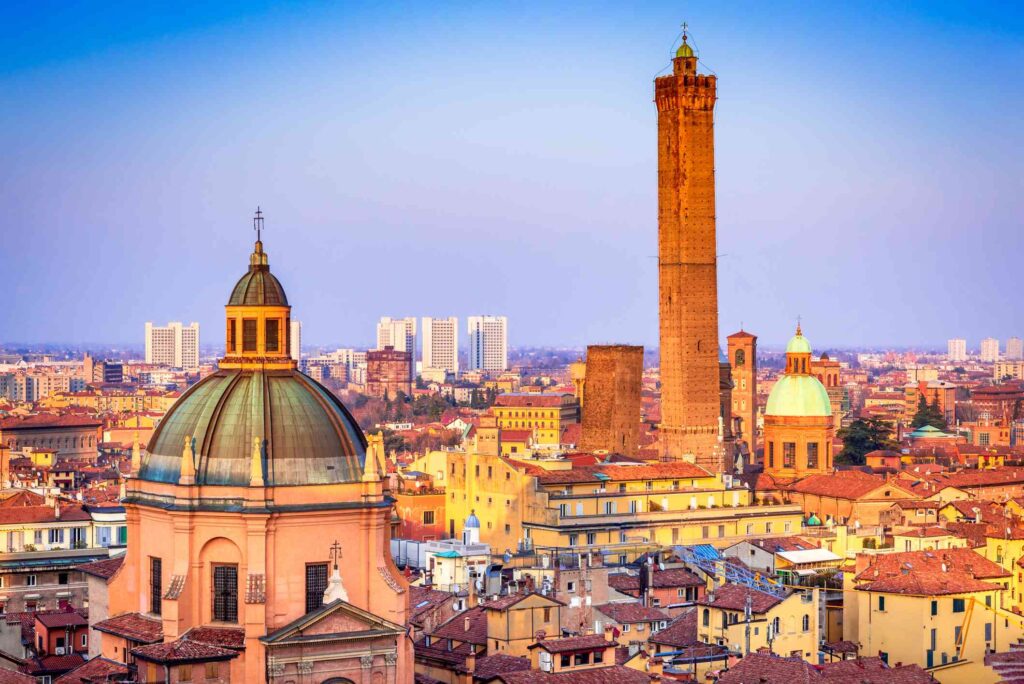
Italy: Milan or Bologna
For many Argentines, the connection to Italy is not merely cultural but deeply ancestral. A significant portion of Argentina’s population boasts Italian heritage, and even without immediate access to Italian citizenship by descent (Jus Sanguinis), the Argentine passport provides favorable entry and long-stay pathways into Italy that are not available to citizens of most other non-EU countries. Argentina and Italy share a history of bilateral agreements that facilitate various visa types, including student visas, working holiday programs, and long-term residency based on specific professional or family connections (Ministero degli Affari Esteri e della Cooperazione Internazionale, 2024.).
For those who do qualify for Italian citizenship by descent, holding an Argentine passport can even simplify the application process by providing a strong initial connection and familiar documentation. Once Italian citizenship is obtained, the entire European Union opens up for free movement.
Even without direct ancestry, specific Italian cities offer compelling reasons for Argentines to relocate:
- Milan: As Italy’s economic and fashion capital, Milan offers robust opportunities in finance, design, tech, and logistics. It’s a highly international city, making it easier for new arrivals to find their footing.
- Bologna: Known for its ancient university, Bologna attracts a large international student population, including many from Latin America. It boasts a high quality of life, a renowned culinary scene, and a comparatively lower cost of living than major hubs like Rome or Florence.
The ability to settle in Italy more smoothly than most non-EU citizens is a unique privilege for Argentines, especially under existing consular and cultural exchange agreements.
Useful Resources for Argentines Moving to Italy
- Ministero degli Affari Esteri e della Cooperazione Internazionale
- Ministero dell’Interno – Inmigración y Nacionalidad
- Embajada de Argentina en Italia
- Guía sobre Ciudadanía Italiana por Descendencia (Jus Sanguinis)
- Universidad de Bolonia – Sitio Oficial
- YesMilano – Guía Oficial para Vivir y Trabajar en Milán
Germany: Berlin
While Germany may not share the same immediate linguistic or historical ties as Spain or Italy, it offers a distinct set of highly organized and advantageous pathways to work and residence for skilled migrants, and Argentine passport holders are exceptionally well-positioned to benefit. Critically, Argentines are eligible to apply for the EU Blue Card, a dedicated residence permit designed to attract highly qualified non-EU professionals (Make it in Germany, 2025).
The EU Blue Card provides numerous benefits, including:
- Streamlined Visa Process: A faster and more straightforward application process compared to general work visas.
- High-Paying Jobs: It requires a minimum gross annual salary (adjusted annually) demonstrating a high-skilled position, ensuring good earning potential.
- Accelerated Permanent Residency: Blue Card holders can obtain permanent residency in Germany after just 27 months if they demonstrate basic German language skills (A1 level), or even after 21 months with intermediate German (B1 level) (Bundesamt für Migration und Flüchtlinge, 2025.).
Berlin, in particular, has become a magnet for younger Argentines, creatives, and tech professionals due to its:
- Dynamic Startup and Tech Ecosystem: Berlin is a thriving hub for innovation, offering numerous opportunities in the digital and creative sectors.
- Affordable Art and Co-Living Spaces: Compared to other major European capitals, Berlin offers a more accessible cost of living, especially for housing.
- English-Friendly Bureaucracy: While learning German is essential for long-term integration, many bureaucratic processes and professional environments in Berlin are navigable in English, at least initially.
For non-EU citizens from Argentina, applying for these programs is relatively straightforward if the academic and salary requirements are met. The professionalism and clarity of Germany’s immigration system, coupled with historical diplomatic ties, mean that Argentines often find fewer unexpected cultural or bureaucratic barriers than other Latin American nationalities.

Useful Resources for Argentines Moving to Germany
Uruguay: Montevideo
Just across the Río de la Plata, Argentina and Uruguay enjoy one of the closest diplomatic, cultural, and social relationships in the entire region. This deep bond is formally solidified by their shared membership in MERCOSUR, the Southern Common Market, which grants citizens of member states significant freedom of movement rights. An Argentine passport holder can relocate to Uruguay with remarkable ease, almost as simply as moving between Argentine provinces, thanks to the MERCOSUR residency agreement and Uruguay’s welcoming domestic migration laws (MERCOSUR Citizenship, 2025.).
The MERCOSUR Residency Agreement allows citizens of full member states (Argentina, Brazil, Paraguay, Uruguay, and Bolivia) and associated states (including Chile, Colombia, Ecuador, Peru) to obtain temporary residency for up to two years in another member country with minimal requirements (typically just a valid passport, birth certificate, and clean criminal record). After this temporary period, they can apply for permanent residency. This process is significantly faster and less burdensome than for non-MERCOSUR nationals (Dirección Nacional de Migración Uruguay, 2025).
Montevideo, Uruguay’s tranquil capital, offers a compelling lifestyle for Argentines due to:
- A Peaceful, Stable Urban Environment: Uruguay is renowned for its political stability, low corruption, and excellent social indicators, providing a calm contrast to more bustling Latin American metropolises.
- Shared Language, Customs, and Lifestyle: The cultural similarities, from accents to culinary preferences, make adaptation almost seamless. Many Argentines even own properties in Uruguay and commute regularly.
- Automatic Recognition of Most Argentine Professional Titles: Bilateral agreements facilitate the validation of professional qualifications, easing entry into the Uruguayan job market for skilled Argentines.
- Interoperable Social Security Systems: The MERCOSUR agreement includes provisions for the harmonization of social security benefits, allowing accumulated working time in one member state to count towards retirement or other benefits in another.
Many Argentine retirees, remote workers, and families choose Montevideo for its laid-back pace, high quality of life, and robust social stability.

Useful Resources for Argentines Moving to Uruguay
Chile: Santiago
Another highly accessible and attractive option just across the Andes is Chile. Argentines benefit from special residency rights under both bilateral agreements and the broader MERCOSUR framework, simplifying the process of establishing a new life. Santiago, Chile’s modern capital, serves as a dynamic hub for professionals in sectors like finance, mining, technology, and renewable energy.
The Argentine passport provides several key advantages for moving to Chile:
- Quick Legal Residency and Work Authorization: Argentine citizens can apply for and obtain temporary residency and work permits under streamlined MERCOSUR procedures, significantly faster than other non-regional nationals (Servicio Nacional de Migraciones,2023).
- A Highly Functioning Infrastructure: Chile boasts one of Latin America’s most developed infrastructures, with efficient public transportation systems, high-quality public healthcare, and modern urban amenities, particularly in Santiago.
- Relatively Easy Adaptation Process: While Chile has its own distinct culture, the shared language and general South American context make the adaptation process much smoother for Argentines compared to moving to a non-Spanish-speaking country.
- Mutual Recognition of Diplomas: Agreements between Argentina and Chile facilitate the recognition of academic and professional diplomas, making it easier for Argentines to continue their studies or enter the Chilean job market with their existing qualifications (UK ENIC, 2025, concerning UK-Argentina/Chile agreements).
Santiago, with its robust economy, strong institutions, and proximity to Argentina, offers a compelling mix of professional opportunities and a high quality of life, all made easily accessible by the advantages of holding an Argentine passport.

Useful Resources for Argentines Moving to Chile
Argentine Passport Means Mobility And Advantage
The Argentine passport might not possess the historical prestige of certain G7 nations, but in practical terms, it is undeniably one of the most underrated and strategically powerful passports in the Global South. Whether it’s the cultural affinity and significantly reduced residency times for citizenship in Europe, or the invaluable freedom-of-movement policies within Latin America facilitated by MERCOSUR, Argentine citizens find doors open to them that remain firmly closed for many others.
If you are considering dual citizenship or already hold an Argentine passport, do not underestimate its profound value. It extends far beyond mere easy travel; it is a genuine gateway to actual life opportunities across continents, providing a unique degree of flexibility and legal advantages in some of the world’s most desirable and livable cities.