
For students seeking a high-quality education at a fraction of the cost, studying in Argentina offers one of the most accessible university systems in the world. From world-renowned public universities that have historically offered free tuition to elite private institutions with international programs, the country provides a wide range of options for foreigners. Whether you’re coming for a semester or an entire degree, this guide covers everything you need to know about studying in Argentina, including public and private universities and how to apply.

A Country Where Education Is a Right, Not a Privilege
Argentina stands out in Latin America for its strong public education system, deeply rooted in the idea that education should be free and accessible to all. Public universities have long been tuition-free for both locals and foreigners, making studying in Argentina an attractive option for students from countries where higher education is expensive or exclusive (Standyou, 2025).
However, a significant change has occurred recently: as of July 1, 2025, the national government announced that public universities would have the authority to charge tuition fees to non-resident international students (Holafly, 2025). Foreign nationals with temporary residency still retain free access to early childhood, primary, and secondary education, while Argentine citizens and foreigners with permanent residency will continue to enjoy free university education (Holafly, 2025).
A Country Where Education Is a Right, Not a Privilege
Argentina stands out in Latin America for its strong public education system, deeply rooted in the idea that education should be free and accessible to all. Public universities have long been tuition-free for both locals and foreigners, making studying in Argentina a highly attractive option for students from countries where higher education is expensive or exclusive (Standyou, 2025).
However, a significant change has occurred recently. As of July 1, 2025, the national government announced that public universities would have the authority to charge tuition fees to non-resident international students (Holafly, 2025). Foreign nationals with temporary residency still retain free access to early childhood, primary, and secondary education, while Argentine citizens and foreigners with permanent residency will continue to receive free university education (Holafly, 2025).

Public Universities: High Quality with Evolving Costs
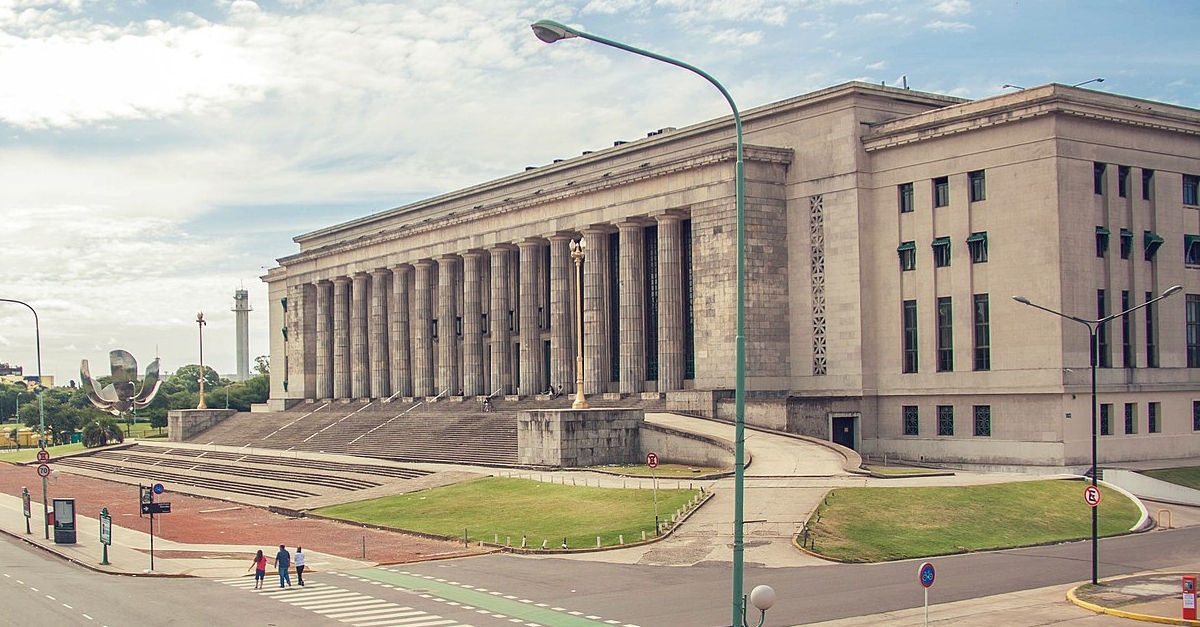
Public universities like the Universidad de Buenos Aires (UBA), Universidad Nacional de Córdoba (UNC), and Universidad Nacional de La Plata (UNLP) are consistently ranked among the best in Latin America. UBA, in particular, is highly regarded, ranking #84 in the QS World University Rankings 2026 and #8 in Latin America and the Caribbean Rankings (Top Universities, 2025).
Pros of Public Universities for Students Studying in Argentina:
Historically free tuition, now primarily for Argentine citizens and permanent residents, with potential fees for non-resident international students as of July 2025 (Holafly, 2025).
Large campuses and diverse student populations.
No traditional entrance exams for many undergraduate programs; instead, some, like UBA, require completing a CBC (Ciclo Básico Común), a basic general curriculum, before entering your desired faculty (UniPage, 2024). This preparatory course can sometimes be avoided with a school average above 8/10 points (Times Higher Education, 2024).
Wide selection of academic fields.
Challenges:
Most programs are taught entirely in Spanish, requiring proficiency (UniPage, 2024).
Bureaucracy can be slow and complex.
Large class sizes in popular programs.
Despite the evolving tuition policy for non-residents, many international students value the opportunity of studying in Argentina at highly ranked institutions while gaining an immersive cultural and academic experience.
Private Universities: Structure, Services, and Flexibility

Private universities in Argentina, such as Universidad Torcuato Di Tella, Universidad de Palermo, and Universidad Austral, offer a more structured academic environment for students studying in Argentina. Many of these institutions also feature bilingual or fully English-taught programs, international partnerships, and smaller class sizes.
Pros of Private Universities for Students Studying in Argentina:
More organized and responsive administration.
English-language programs are available (UniPage, 2024).
Modern facilities and campuses.
Ideal for postgraduate and exchange programs.
Challenges:
Tuition costs generally range from $2,000 to $8,000 USD per year for undergraduate programs, depending on the university and program. Postgraduate programs can range from $2,500 to $10,000 USD per year (Standyou, 2025; UniPage, 2024).
Fewer locations, mostly concentrated in Buenos Aires.
Private universities provide a flexible and international-focused option for those studying in Argentina, complementing the more traditional public university experience.
Studying in Argentina Without a Visa?
Some students, particularly those enrolled in short-term language courses (less than 90 days), can engage in studying in Argentina while on a tourist visa. This visa can be “renewed” by briefly leaving and re-entering the country (Expanish, 2024). However, this approach is not recommended for long-term or degree-seeking students, as it does not grant legal student status and may lead to complications with immigration (UMW, 2014). For any program exceeding 90 days, obtaining a student visa is mandatory for legal compliance and stability (Expanish, 2024).
What About Language?

Most undergraduate and postgraduate programs in Argentina are taught entirely in Spanish (UniPage, 2024). While English is becoming more widely spoken in cities like Buenos Aires, fully English-taught degree programs are primarily found in some private institutions (Educations.com, 2024). If your Spanish is not fluent (a B2 level or higher is often required), consider taking a preparatory course; many universities offer them for foreign students (UniPage, 2024).
Living Costs for Students
Argentina remains one of the most affordable countries for studying in Argentina in 2025, especially for students with income in stronger currencies like USD or euros. While costs can fluctuate due to economic conditions, in Buenos Aires, recent estimates for a comfortable student lifestyle range from $980 to $1,650 USD per month, depending on lifestyle and housing (Nomads.com, 2025). This includes rent, which for a one-bedroom apartment in the city center can be around $330–$600 USD per month (Nomads.com, 2025; Expat Exchange, 2025). Public transport, food, and basic health insurance are generally inexpensive by global standards (Standyou, 2025).

Ready to Begin Studying in Argentina?
Whether you’re seeking a world-class degree at a potentially low cost or a structured international education experience, studying in Argentina offers opportunities few countries can match. Public universities, while adapting to new tuition policies for non-residents, remain highly ranked, and private institutions provide a premium, flexible alternative. Studying in Argentina not only opens academic doors but also allows you to live in one of the most vibrant cultural hubs in the world—at a cost that, for many, won’t lead to debt.


